


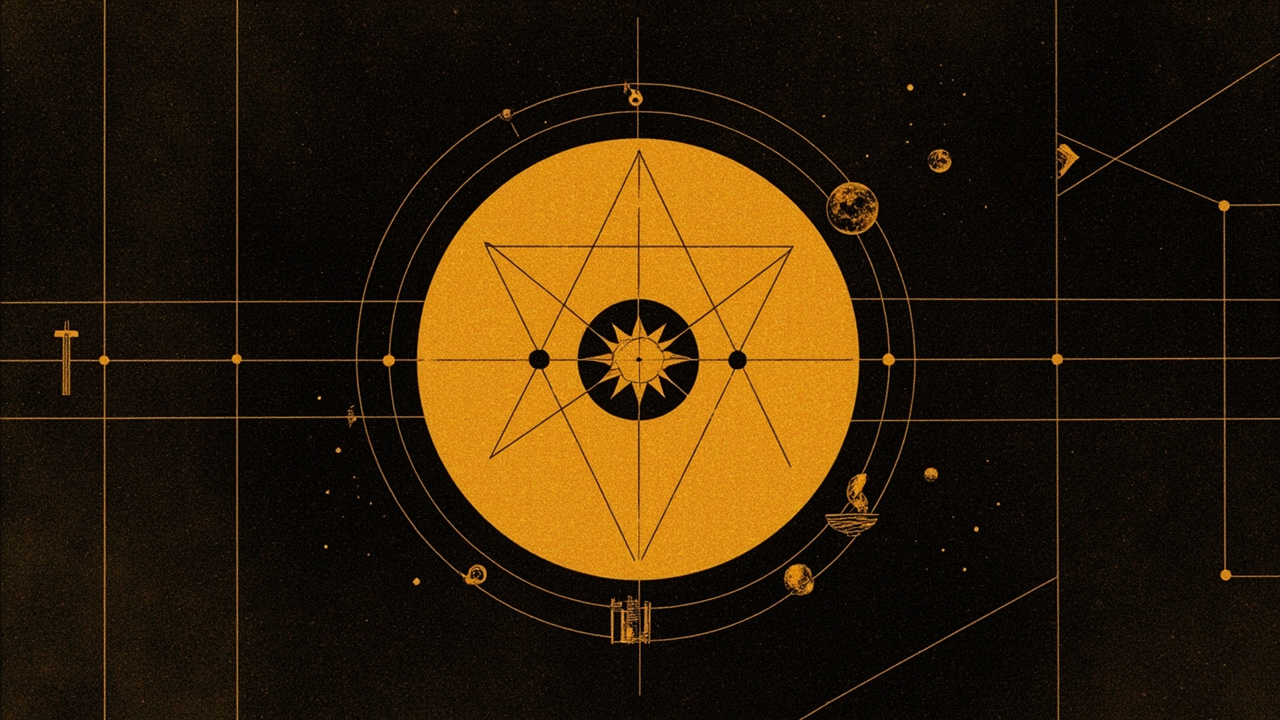
The Juxtaposition Cross of Habits is a fixed-fate incarnation. Where the Right Angle cross moves through the world asking questions to fulfill personal destiny,
The Juxtaposition Cross of Habits
The Juxtaposition Cross of Habits is a fixed-fate incarnation. Where the Right Angle cross moves through the world asking questions to fulfill personal destiny, and the Left Angle cross navigates the karma and expectations of others, the Juxtaposition cross simply is. It does not seek, and it does not respond. It demonstrates. Individuals carrying this cross are fixed points in a moving world, a living pattern through which a specific way of being is made visible. With the Personality Sun anchored in Gate 5 — the Gate of Patterns, seated in the Ajna — this demonstration is centered on rhythm, repetition, and the natural habits that shape human life.
The Juxtaposition Angle: Fixed Fate
The Juxtaposition cross is sometimes called the Cross of Eden, referring to a quality of being that feels predetermined. These beings appear to arrive already patterned, already shaped, already a particular way. Their fate is not something to be discovered or chosen in the moment; it is something to be embodied. The world looks at them and sees a particular quality of existence reflected back. The cross holds the other three gates — Gate 49, the gate of Revolution and Principles — in a tight, fixed relationship with the Pattern gate, creating a demonstration of how principles and patterns interlock in a single life. This is not karma to be resolved, nor a destiny to be sought. It is a way of being that the world itself needs to witness.
Curious if this is in YOUR chart? Calculate your free Human Design.
Calculate your chartThe Life Theme: Patterns as Identity
The core theme of this cross is that the person is the pattern. They are not learning to recognize patterns from the outside; they are the pattern made flesh. Gate 5 is the gate of waiting — waiting for the natural rhythm of life to reveal its contours. The Personality Sun here suggests that the individual is here to live by their own natural timing, trusting the slow, organic unfolding of habits that serve them. This is not about rigid routine imposed from discipline, but about the inner recognition of what naturally recurs, what naturally fits, and what is simply true in a recurring way. The presence of Gate 49 in the cross adds the element of principled action — the patterns that emerge are not random but rooted in deep inner values, and when those values are violated, a quiet revolution becomes possible.
How the Purpose Unfolds
Because this is a fixed-fate cross, purpose does not unfold through striving or through responding to others. It unfolds through consistency. The life reveals its purpose by repeating itself. What the person returns to, what they are drawn to over and over, what their attention naturally falls upon — that is the teaching. The pattern does not need to be invented; it is already running. The work of the cross is to stop interfering with it, to stop forcing variation where there is natural recurrence, and to trust that the demonstration itself is the contribution.
Gifts
The gifts of this cross are striking. Those carrying it often have a natural authority in matters of rhythm and timing — others feel settled in their presence because their consistency is palpable. They can see patterns in situations where others see only chaos. They embody a kind of integrity: their habits and their principles are not in conflict. There is a trustworthiness that comes from being a fixed point, and others unconsciously rely on that stability. Their lives become a teaching simply by being lived.
Challenges
The challenges are equally clear. Fixed fate can feel like a trap to those who long for choice or reinvention. The Pattern gate's lower expression is impatience with the pace of life, and the cross can struggle against its own nature, trying to force outcomes, break rhythms, or become something other than what it is. There can also be a quiet loneliness in being a fixed point — others pass through, change, adapt, while the Juxtaposition being remains essentially the same. Accepting the demonstration rather than resenting it is the central work.
Practical Living
Practically, the cross of Habits thrives on respecting natural rhythm. Sleep, work, creativity, and rest follow inner cycles rather than external demands. Imitation of others' patterns is to be avoided; the only relevant pattern is one's own. When decisions are required, the question is not "what is the best option" but "what fits the pattern that is already running." Consistency, in the end, is the meditation. The teaching is the life itself.