

How the movement of planets activates different gates and influences your daily experience.
Planetary Transits and Their Impact on You
A transit is simply a planet in the sky, moving in real time, making an aspect to a point in your Human Design chart — and because the sky never stops moving, neither do you. Every few hours, every few days, every few years, a different planetary body brushes against a gate, a channel, or a center in your bodygraph and activates a specific kind of energy. The chart you were born with is the instrument; transits are the weather playing through it.
What a Transit Actually Is
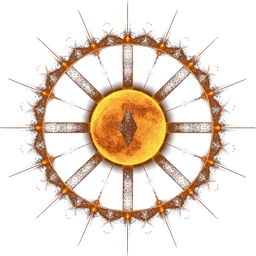
In astrology, a transit is the current position of a planet forming an angle (a conjunction, opposition, trine, or square) to where a planet was at the moment of your birth. In Human Design, we translate that same idea into the language of the mandala: a moving planet lighting up a gate, which then completes a channel if its partner is also defined in your chart, which then brings a defined or undefined center online — at least for the duration of the transit.
Curious if this is in YOUR chart? Calculate your free Human Design.
Calculate your chartThe personal planets move quickly and bring daily, weekly, monthly flavors. The social planets move in years-long arcs and shape the seasons of your life. The outer planets — Jupiter, Saturn, Uranus, Neptune, Pluto — move so slowly that their transits become generational signatures, and when they land on something personal in your chart, the impact is profound and long-lasting.
The Sun and the Daily Shift
The Sun transits a new gate roughly every 5–6 days, moving counterclockwise through the mandala. This is the most accessible transit to track. Each solar transit activates the I Ching hexagram of that gate, offering a brief theme — a coloring, a question, a directional pull. The gift of paying attention to the Sun's transit is that you begin to feel the rhythm of the design itself. The shadow is obsessive tracking: waking up every morning to ask, "what gate is the Sun in?" can become a subtle way of outsourcing your authority to the cosmos instead of listening to your Strategy and Inner Authority.
Moon Transits: The Two-and-a-Half-Day Mood
The Moon changes gates every 2.5 days and is the fastest moving body we work with. Because the Moon touches every center in the chart during its 28-day cycle, you will, in any given month, experience a full activation of your entire bodygraph — defined and undefined alike. This is enormously useful if you have a lot of openness. The gift: an undefiend center briefly gets illuminated, and you can feel what that energy actually is — and let it pass. The shadow: emotional identification with the Moon's transit, treating the lunar mood as "yours" when it is really just weather. Strategy and Authority remain the inner compass, not the Moon.
Mercury, Venus, and Mars: The Social Week
These three move fast enough to bring weekly themes. Mercury transits affect thinking, communication, and the nervous system; Venus brings relational and value-oriented coloring; Mars activates drive, frustration, and the willpower center. When any of them cross a gate connected to a defined channel in your chart, you get a temporary amplification of that channel's theme. The practical guidance here is to notice what themes repeat across a week, because the body is collecting data about what the transit is asking you to be aware of.
The Outer Planets: The Real Movers
Jupiter takes about 12 years to circle the mandala, Saturn roughly 29. Uranus about 84, Neptune around 165, and Pluto up to 248. These transits don't whisper — they rearrange. A Pluto transit to a personal gate can take a year to apply, a year to exact, and a year to separate, and the work it asks of you is rarely optional. Saturn transits test and crystallize; Uranus disrupts and electrifies; Neptune dissolves boundaries and demands surrender; Jupiter expands whatever it touches.
The gift of an outer planet transit is that you are given an unmistakable theme for a long stretch of your life. The shadow is waiting for the transit to "end" before you do the work. The transit doesn't go away until you've metabolized it. Working with it means letting the body — your Authority — respond, instead of the mind trying to decode it.
How to Work With Transits Practically
1. Know your defined channels. These are the places where transits will reliably activate something fixed in you.
2. Track the Sun and Moon first. Build a felt sense of the rhythm before diving into Pluto.
3. Notice, don't narrate. When a transit hits, observe what shifts in your energy, your relationships, your appetite, your sleep. The body knows before the mind does.
4. Honor Strategy and Authority. A transit is an invitation, not an instruction. If your Sacral is "uh-uh," it doesn't matter that Jupiter is in your Gate of the Open Heart.
5. Keep a transit log. Two lines a day — what gate, what you noticed — becomes an almanac of self-knowledge within a year.
The sky is always transiting. The question is not whether you are being impacted, but whether you are conscious enough to meet the impact as a participant rather than a victim of cosmic weather.