

A conscious relationship begins when two people stop trying to change each other and start honoring the way each is actually designed to operate. Human Design o
Human Design for Couples: Building a Conscious Relationship
A conscious relationship begins when two people stop trying to change each other and start honoring the way each is actually designed to operate. Human Design offers a remarkably precise, bodygraph-based language for doing exactly that, making it one of the most powerful tools available for couples who want to move beyond reaction and into real partnership.
What Human Design Actually Offers Couples
Human Design is a synthesis of the I Ching, the Kabbalah, the Hindu-Brahmin chakra system, astrology, and quantum physics, channeled by Ra Uru Hu beginning in 1987. At its core is the Bodygraph: a visual map of how a person's energy moves through nine centers, thirty-six channels, and sixty-four gates. When two people enter a relationship, their individual designs are still completely unique, but the way those designs interact creates a third, living system: the relationship itself.
For couples, Human Design provides three layers of practical guidance:
1. Self-knowledge — understanding your own Type, Strategy, Authority, and Definition.
2. Other-knowledge — appreciating the radically different way your partner is built.
3. Interaction knowledge — seeing what the two Bodygraphs create when placed side by side: the Composite, electromagnetic connections, and shared conditioning.
Most couples who approach Human Design skip straight to "what are we as a pair," but the system only works when each person first knows themselves. The Composite is a mirror, not a script.
The Four Foundations Every Couple Should Establish
Before any advanced interaction work, each partner should be clear on their own design. These four pillars form the bedrock of conscious relating.
Type: The Mechanical Role You Play
Type describes the mechanical nature of how you interact with the world and with other people. There are four: Generator (including Manifesting Generator), Projector, Manifestor, and Reflector.
- Generators and Manifesting Generators are the life force of the planet. Their strategy is to respond — to wait for life to come to them, then follow the surge of sacral satisfaction. In a couple, a Generator often feels pressured to "just decide" and is happiest when invited rather than pushed.
- Projectors are here to guide and recognize the energy of others. Their strategy is to wait for the invitation. The single most common source of bitterness in Projector relationships is the feeling of being overlooked or giving unsolicited advice.
- Manifestors are initiators. Their strategy is to inform before they act. Many Manifestor-conflict issues dissolve when they simply let their partner know what's about to happen.
- Reflectors are mirrors of the lunar cycle, sampling every center. Their strategy is to wait a lunar cycle (about 28 days) before making major decisions. In partnerships, Reflectors need space and a healthy environment more than any other Type.
Knowing each partner's Type allows a couple to stop interpreting "she's not answering" as rejection (a Generator simply has nothing to respond to) or "he's always giving advice" as control (a Projector can't help seeing what they see).
Strategy: How Each Person Is Designed to Engage
Strategy is not a goal or a life plan. It is a mechanical, moment-to-moment way of moving through the world that minimizes resistance. When a Generator responds, energy flows. When a Projector waits for the invitation, recognition comes. When a Manifestor informs, resistance drops. When a Reflector waits, clarity emerges.
Couples who learn each other's Strategy stop taking non-response personally. A Generator who doesn't answer "where should we go for dinner?" isn't being difficult — they literally don't have the internal signal until the options land. A Projector who doesn't jump into a new social plan isn't cold — they're waiting to feel invited.
Authority: Your Inner Decision-Making System
Authority is the body's way of making correct decisions. It overrides the mind every time.
- Emotional Authority (Solar Plexus) — needs time and wave-awareness; clarity comes over emotional cycles.
- Sacral Authority — a gut "uh-huh" or "uh-uh" in the moment.
- Splenic Authority — an instinctive, in-the-moment knowing for survival and well-being.
- Ego/Will Authority — a "will I do this or not?" through the heart center.
- Self-Projected (G Center) Authority — clarity comes by talking it out and hearing yourself.
- Mental Projectors / Outer Authority — needs to talk through the environment to access direction.
- Lunar Authority (Reflectors only) — needs the full moon to pass before clarity arrives.
Couples who honor each other's Authority stop the most common relationship fight of all: "let's just decide now." If one partner is Emotional and the other is Splenic, the couple can build a small protocol — for instance, sleeping on non-urgent decisions — that respects both inner clocks.
Definition: How You Are "Made Whole"
Definition describes how your centers connect, forming a self-sustaining energetic unit. A person can be Single Definition (one connected system, self-contained), Split Definition (two unconnected areas, must reach out to others for completion), Triple Split (three areas, very relational), or Quadruple Split (four areas, deeply relational). They can also be No Definition, which is the Reflector.
This matters in couples because it predicts how much bridging each partner needs. A Triple Split person will naturally seek multiple close connections; a Single Definition person may feel drained by too much togetherness. Knowing this prevents the misreading of "I need other friendships" as a sign of disloyalty.
The Five Ways Couples Interact Energetically
Once each partner knows their own design, the relationship itself becomes a study. Ra Uru Hu described several distinct energetic patterns that emerge between two Bodygraphs.
Electromagnetic Connections
When one person has a gate that the other has the channel partner for, an electromagnetic pull exists. The gate-person attracts, the channel-person decides. The classic example: one partner has Gate 35 (the gate of "change, where the new comes in") and the other has the Channel 35-36 connecting it. In this dynamic, the channel-person keeps choosing whether to follow, and the gate-person keeps generating new experiences. These connections feel magnetic, even fated, and can become points of growth or friction depending on awareness.
The Dominant Channel
If one partner has both gates of a channel and the other has none, the first partner has a Dominant Channel in the relationship. They will likely "lead" in the energy of that channel, and the other will need to develop their own relationship to that theme. For example, if Partner A has the full Channel 51-25 (Initiation) and Partner B has nothing connected there, Partner A will likely be the one bringing shock and new life-force into the partnership.
Compromise Channels
When each partner holds one gate of a channel but neither has both, the channel is "compromised" between them. The energy of that channel can only be expressed through the relationship. These themes become shared creative territory. For instance, if one has Gate 12 (caution) and the other has Gate 22 (openness), the couple develops a unique expression of Channel 12-22 that neither could fully access alone.
Dominant Crosses
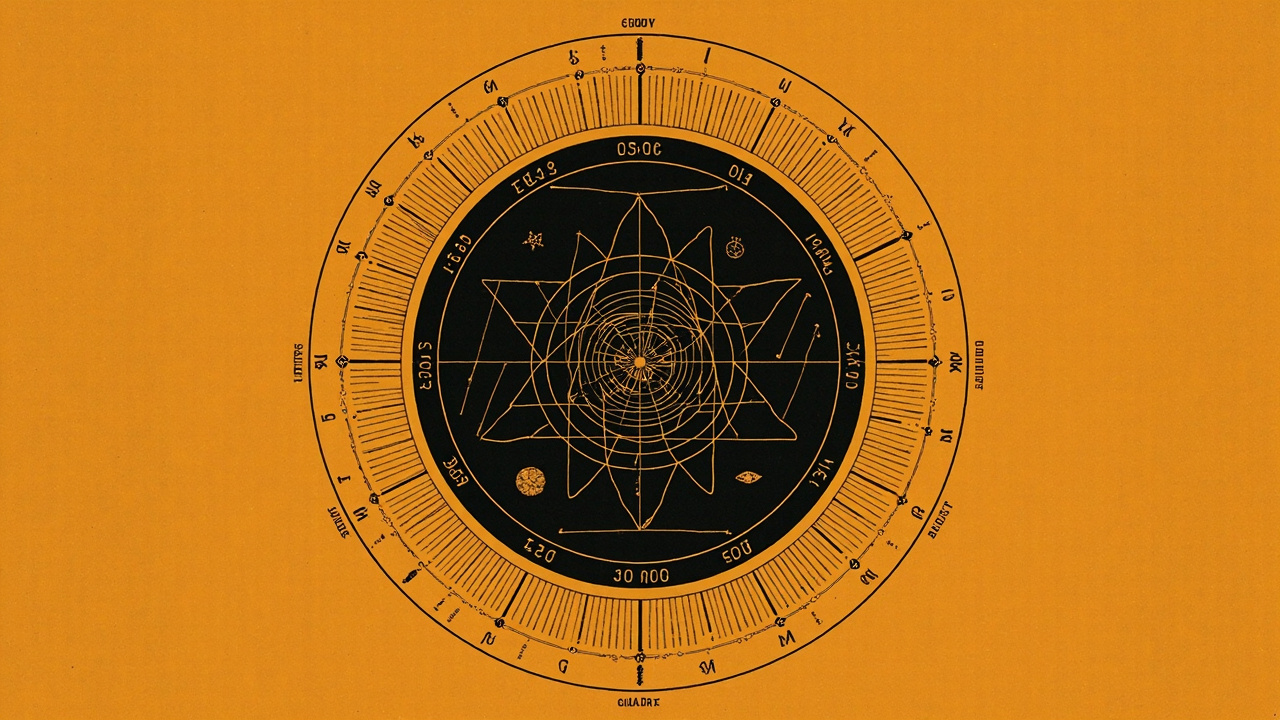
In the Composite (the wheel of gates placed outside the Bodygraph), certain crosses — Incarnation, Personal, and Planet — dominate depending on the relationship theme. Couples can look at the Composite cross as a "life theme" the relationship is here to live out.
The Relationship as Its Own Being
Most importantly, the relationship is not the sum of two people. It is a third entity with its own needs, moods, and learning curve. Conscious couples regularly check in: "How is the relationship doing today?" rather than only "How are we doing?"
Practical Applications for Daily Life
Knowledge without practice becomes trivia. Here is how a couple can bring Human Design into the texture of ordinary life.
The Morning Check-In
Generators and MGs benefit from a question that lets the sacral respond. Reflectors benefit from a simple, low-stakes "How does today feel?" Emotional partners need space to wave before major conversations. A 5-minute morning check-in that respects each Authority builds a daily rhythm of attunement.
Decision-Making Protocols
Couples can co-create small, written protocols: "We sleep on any decision over $500." "No decisions about our sex life during a lunar return." "Major moves are discussed, never declared unilaterally by a Manifestor — but the Manifestor still has the final go." These aren't rules; they're experiments in honoring design.
Sleep, Sex, and the Body
Generators have the most reliable life-force; their energy rises and falls in clear cycles. Projectors are designed for rest and recognition, not for daily endurance. Reflectors sample the environment and need sleep in clean, well-kept spaces. Couples who align sleep rhythms, sex rhythms, and even household noise to Type and Authority tend to report feeling more at ease in the relationship without knowing exactly why.
Conflict as Information
Human Design reframes conflict. The mind, called the "not-self," will always prefer the open, conditioning-driven side. When a couple fights, the open centers are likely amplifying each other's conditioning. A simple question — "Whose open center is loud right now?" — can de-escalate quickly. Two people with open Root centers, for example, will press on each other's adrenal buttons until they recognize the shared conditioning.
The Composite in Daily Life
Many couples print the Composite and place it where they can see it. The 64th gate position in the Composite, sometimes called the Relationship Sun, is the channel of the Moon, and it gives a flavor of the relationship's deepest purpose. The Incarnation Cross of the Composite is a multi-year theme to be lived together.
Common Misconceptions to Release
A few patterns undermine couples who approach Human Design without care.
- "My Type is the right one." Every Type is necessary. The planet cannot function without Generators powering it, Projectors guiding it, Manifestors initiating, and Reflectors reflecting.
- "My partner should know this by now." Learning your own design is a multi-year practice. Expecting your partner to "get it" faster than you did is a recipe for bitterness.
- "The Composite tells us if we're compatible." The Composite shows theme, not verdict. Any two Types can have a healthy relationship with awareness.
- "Strategy replaces communication." Strategy is not a communication style. It is mechanical. Couples still need words, repairs, and ordinary kindness.
- "Authority is a magic 8-ball." Authority is a slow, embodied practice. The mind will constantly try to overrule it.
A Real-Life Composite Example
Consider a couple we'll call Maya and Jordan. Maya is a 5/1 Splenic Projector with a Single Definition. Jordan is a 3/5 Sacral Generator with a Triple Split.
- Maya's Strategy: wait for the invitation. Jordan's Strategy: respond.
- This means Jordan should invite Maya into big decisions, projects, and even social plans, and Maya should trust Jordan's sacral "uh-huh" instead of pitching ideas.
- Maya's Splenic Authority: in-the-moment, instinctive. Jordan's is the same. Both will be tempted to override their intuition with logic. Their shared practice can be: "When in doubt, pause for ten minutes."
- Jordan's Triple Split means he will naturally maintain several other close connections. Maya's Single Definition means she may feel overwhelmed by frequent social obligations. A practical agreement: two "people-heavy" social events per week maximum, and a quiet night together as a baseline.
- Their Electromagnetic Connections might include Gate 7 (the role of the self in leadership) in Maya meeting Jordan's Gate 31 (leading for the other). This becomes a recurring growth edge: who is leading, who is following, and how do they keep choosing?
The Bodygraph doesn't tell them what to do, but it shows them where the friction is generated and where the gifts are waiting.
A Brief Comparison Table: Type Behaviors in Couple Contexts
| Type | Default Gift to the Relationship | Default Friction Point | Helpful Practice |
|------|--------------------------------|------------------------|------------------|
| Generator | Sustainable life-force and embodied wisdom | Resentment when not responded to | Partner offers clear invitations |
| Manifesting Generator | Multi-passionate energy and efficiency | Skipping rest and informing steps | Build in true "response" pauses |
| Projector | Deep seeing and wise guidance | Bitterness when not recognized | Daily appreciation check-ins |
| Manifestor | Catalytic initiation and peace-keeping through informing | Surprises the partner | Make informing a default, not an event |
| Reflector | Mirroring the health of the relationship and environment | Mood confusion or sampling overload | Clean, calm environment; slow decisions |
Frequently Asked Questions
How do I get my Bodygraph drawn?
You need your birth date, exact birth time, and birth location. Many free calculators exist online; for the most accurate reading, a Human Design analyst will verify your time and interpret the chart.
What if my partner refuses to look at Human Design?
You can still use the system. Knowing your own Strategy, Authority, and open centers gives you a baseline. Often, the partner becomes curious when they see the system working in you rather than being lectured about it.
Should we treat the Composite like a blueprint for the relationship?
Treat it as a theme map, not a destiny. The Composite shows the deeper currents; how you live them is your choice.
Is it okay to "switch strategies" for the sake of the relationship?
No. Switching Strategy generates resistance and ultimately harm. The relationship is a meeting of two strategies, not the abandonment of one.
What is the most common mistake couples make in Human Design?
Using it to prove a point. "You're being a Projector" is not a tool of growth; it is a weapon. The system is for understanding, not for labeling.
Can Human Design help with sex and intimacy?
Yes, indirectly. Generators need a responsive build-up; Projectors need recognition and invitation; Manifestors often need to initiate without being judged; Reflectors need a clean, safe environment. Knowing these tendencies removes a great deal of miscommunication.
How long does it take to feel the effects of living by design as a couple?
Most couples report a shift within three to six months of consistent practice. The first year is the steepest learning curve as old patterns dissolve.
Conclusion
Human Design for couples is not about finding the "perfect" partner or decoding a relationship's fate. It is a precise, embodied language for two imperfect people to meet each other more honestly. When you know your own Type, Strategy, Authority, and Definition — and when you have the humility to learn your partner's — the friction in the relationship stops being a sign of incompatibility and starts becoming information. The Composite then shows you the larger theme the two of you are here to live. Awareness, not control, is the engine of a conscious relationship. Practiced patiently, Human Design offers couples a way to stop working against their own mechanics and start building a life together that is, by design, more right.