


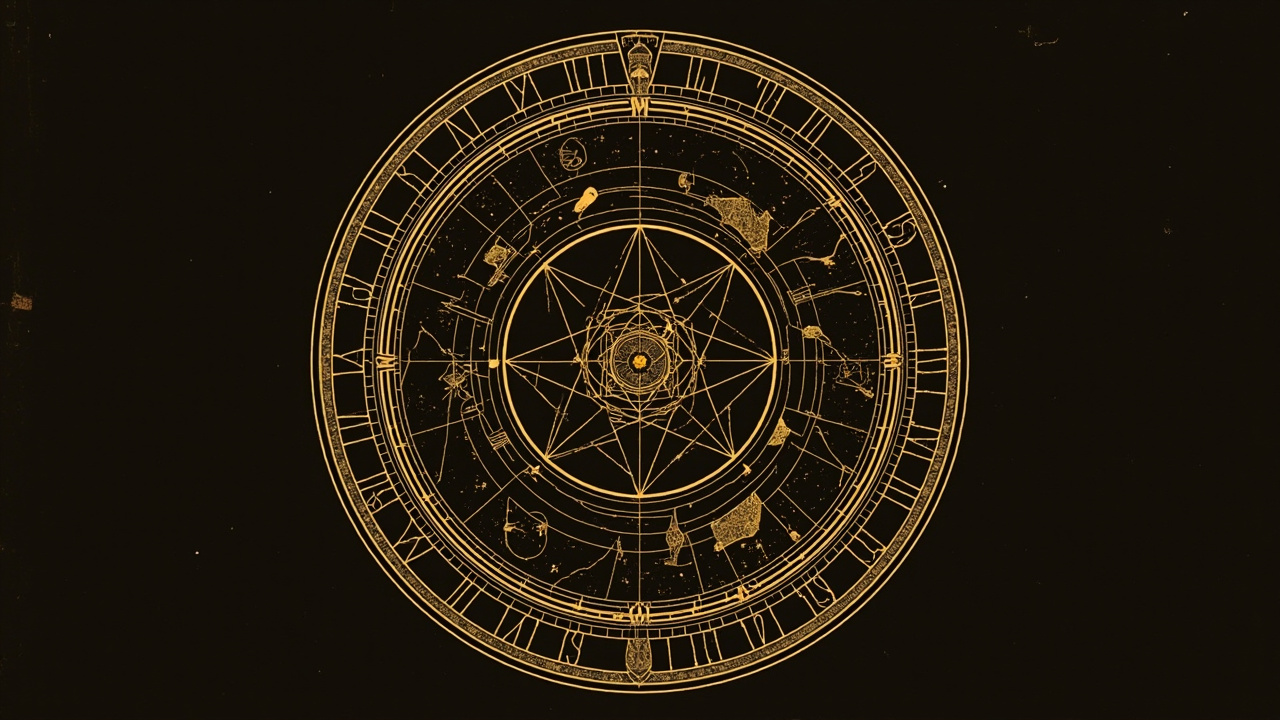
Gene Key 49 in Human Design: shadow "Reaction", gift "Revolution", siddhi "Rebirth".
Gene Key 49: From Reaction to Revolution and the Promise of Rebirth
The Threshold of Transformation
The 49th Gene Key is the doorway through which we learn to alchemize the raw shock of change. In the I Ching it appears as the Hexagram of Revolution (革, Ge) — the energy of molting, of shedding skins, of the world being remade by fire. Within the Kabbalistic body of the Gene Keys, this key lives in the sphere of Netzach, the realm of emotion, desire, and the great rhythmic pulse of life itself. Its codon ring is the Ring of Transformation, where Gene Key 49 meets its mirror, Gene Key 21, in an eternal dance between reaction and response, between the world as it is and the world bending toward what it could become.
The Shadow of Reaction
At its lowest frequency, Gene Key 49 expresses as Reaction. This is not the ordinary cause-and-effect of physics, but the human reflex to meet the world with suspicion, complaint, and a closed fist. When Reaction is running, life is treated as something happening to us rather than through us. We defend old structures out of fear that new ones will betray us. We misinterpret the impulses of others, take offense at the flicker of a stranger's glance, read rejection into benign remarks.
Reaction is a tightly coiled spring of pain, often laid down in childhood when love felt conditional. To the reactive mind, every change is a threat, every invitation a possible humiliation. The body mirrors this contraction: shoulders rise, breath shortens, sleep becomes shallow. We become the loyal guardian of a fortress built on sand.
The deepest work here is not to fight reaction, but to notice it. Reaction claims to be us. It feels personal. But it is only a wave passing through the body, and the moment we name it — "Ah, there is reaction" — we are no longer fully identified with it. A small gap appears, and in that gap, the entire future of the 49th key begins to shift.
The Gift of Revolution
As the shadow loosens, a quite different figure steps forward: the Revolutionary. This is not the rebel without a cause or the agitator on a soapbox, but a rarer being — one who has understood that the world must die a little in order to be reborn, and who has lost the personal need to defend what no longer serves. The gift of Revolution is the capacity to be a catalyst without being consumed by the fire. The revolutionary sees what is outdated with unflinching clarity, and can name it with precision and love.
In practical terms, this gift shows up as the friend who, in a moment of crisis, simply says, "The old way is over, and that is good news." It is the founder who dissolves a company before it calcifies. It is the mother who lets her child go. The gift does not overthrow for the sake of overthrow; it is a responsible force, governed by the natural law of Netzach — that which is vital must be allowed to live, and that which is dying must be allowed to die.
To live in this gift is to court discomfort without flin