


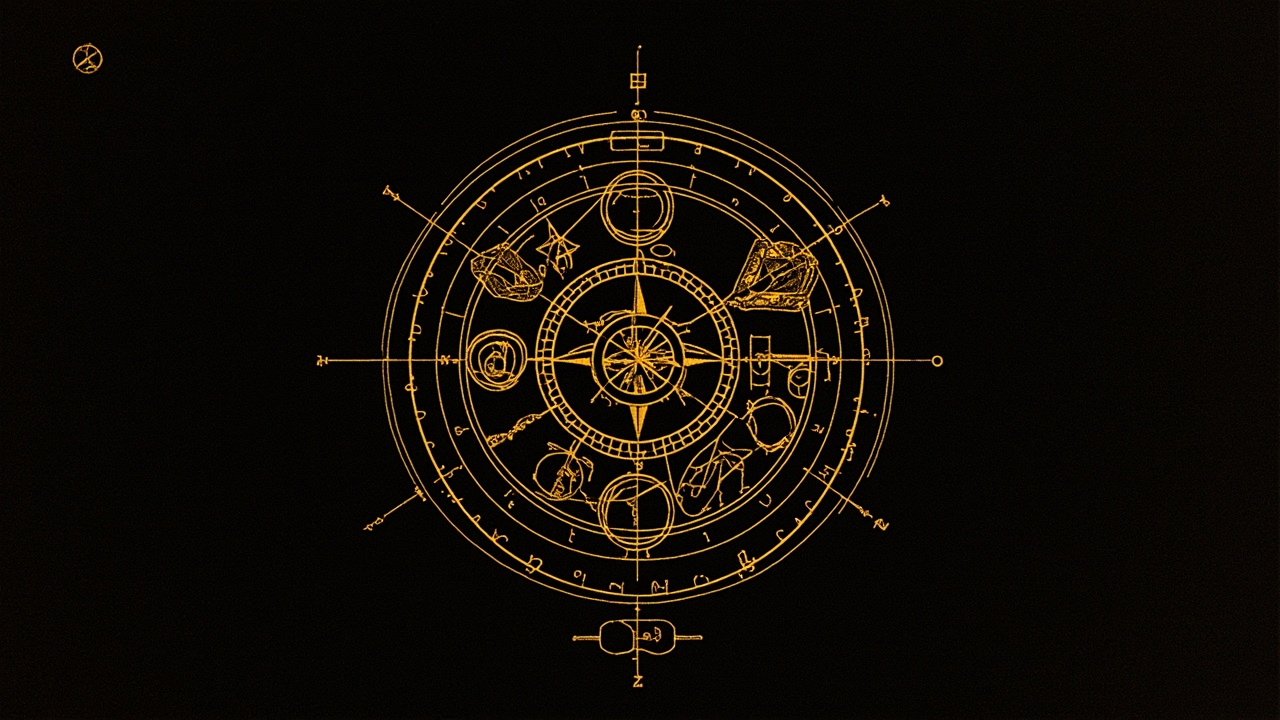
Franz Schubert's Human Design offers a fascinating lens through which to consider his life as a composer, even though any chart-based reading can only ever offe
Franz Schubert's Human Design: Generator 2/4
Franz Schubert's Human Design offers a fascinating lens through which to consider his life as a composer, even though any chart-based reading can only ever offer interpretation rather than biography. With a Generator Type, Sacral Authority, and a 2/4 Profile, the picture that emerges is of a being designed to respond deeply to life, work steadily and sustainably, and channel magnetic energy through both solitary reflection and rich social networks.
Energy Type: Generator
As a Generator, Schubert is built for sustained, magnetic life-force energy. Generators are not designed to initiate from the mental plane the way Manifestors are; they are designed to respond to what life presents to them. This shows up musically as a constant, almost inexhaustible output. In roughly fifteen years of creative maturity, he produced more than 600 Lieder, nine symphonies, dozens of piano sonatas, and a great deal of chamber music. The pace and volume suggest a Sacral engine that, once engaged, simply kept running.
Curious if this is in YOUR chart? Calculate your free Human Design.
Calculate your chartGenerators also have a closed, magnetic aura that draws life toward them. Schubert famously drew people into his orbit, gathering friends around his piano for the informal evenings that became known as Schubertiades. This is magnetic aura in practice: people felt pulled in.
Strategy and Sacral Authority
The Generator strategy is to respond, and Sacral Authority speaks through gut-level "uh-huh" or "uh-uh" sounds, the body's wisdom rather than the mind's analysis. For a composer, this can read as the difference between intellectual construction and an almost involuntary flow of melody. Schubert is repeatedly described as someone for whom songs seemed to arrive fully formed.
Rather than imposing musical ideas from the top down, his creative life appears to have been one of responding: to texts, to moods, to friendships, to the poetry that crossed his desk. He set more than 600 poems to music, often in a single sitting, as though the Sacral was simply saying "yes" to each one in turn.
Profile 2/4: The Hermit/Opportunist
The 2/4 Profile combines the Hermit (Line 2) with the Opportunist (Line 4). The Hermit line needs regular time alone to recover, process, and develop its natural gifts. The Opportunist line builds life through networks of friends, connections, and unexpected opportunities.
For Schubert, this is striking. The Hermit side shows up in his solitary composing practice, working largely in his own head and on paper, often alone in his room. The Opportunist side shows up in the very practical reality that his music was heard, performed, and disseminated almost entirely through the network of friends, singers, and patrons who surrounded him in Vienna. His posthumous fame, too, owes a great deal to friends like Ferdinand Schober and the publisher Diabelli who preserved and promoted his manuscripts.
On the Incarnation Cross
Without a recorded birth time, the exact Incarnation Cross cannot be calculated. The Cross is the specific angle a life is designed to express its purpose through, and it would add an important layer to this reading. Still, the Cross always works in service of the Type and Profile, and what is already visible is a man whose life purpose was clearly lived through response, deep inner work, and meaningful connection.
How These Elements Might Show in His Work
Taken together, the chart suggests a creative life powered by Sacral "yes," expressed through the quiet labor of the Hermit, and brought into the world through the warm network of the Opportunist. This is the portrait of someone whose music did not arrive from grand ambition or self-promotion, but from a body and being that kept saying "yes" to poetry, to friends, and to the moment at the piano, and then carried that yes all the way through into song.