


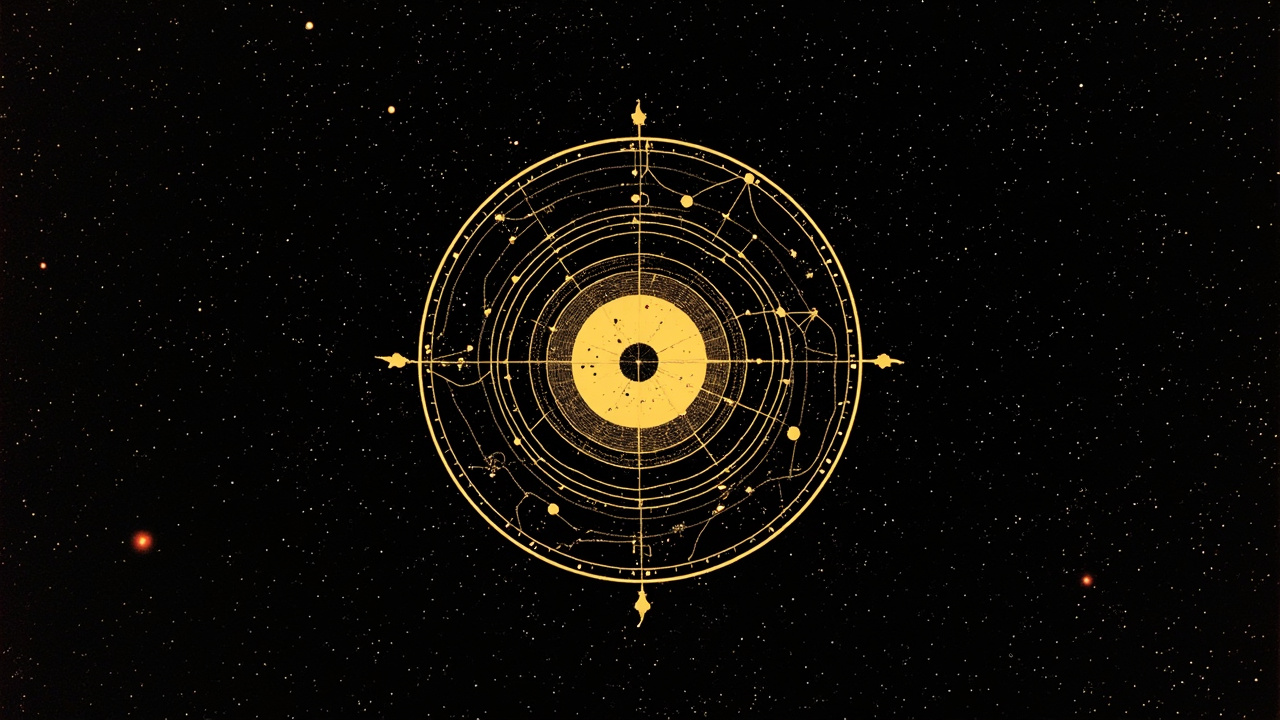
The Incarnation Cross is your 'purpose' or life theme. It consists of 4 gates: Sun and Earth of Personality (conscious) + Sun and Earth of Design (unc...
What is the Incarnation Cross? The Hidden Blueprint of Your Human Design
In the Human Design system, no glyph sparks more fascination and confusion than the Incarnation Cross. Often described as your "life purpose" or "cosmic assignment," it actually functions more accurately as a thematic framework — the role you came to play, the costume you wear in the theater of your existence. Understanding your cross isn't about chasing a destiny carved in stone; it's about recognizing the specific energetic signature you were born to embody.
The Geometry: Four Gates at the Center of the Mandala
The Incarnation Cross is built from the four most stable points in your chart: the positions of the Sun and Earth in both your Personality (conscious, determined by the moment of birth) and Design (unconscious, approximately 88 degrees of solar arc earlier) layers. Each Sun and Earth pair occupies a specific gate, and directly opposite each of those is another gate — giving you four.
Curious if this is in YOUR chart? Calculate your free Human Design.
Calculate your chartThese four gates — top, bottom, left, and right — form the arms of your cross. Unlike other planetary activations, they never shift with transit, which is why the cross is considered the most fixed, immovable part of your design. Together, the four gates form a configuration that only you carry, sitting at the very heart of the Mandala and radiating outward like spokes of a wheel.
Right Angle, Juxtaposition, and Left Angle Crosses
Not all crosses operate the same way. The three main types are:
- Right Angle Cross — for people with a defined G (Identity) Center. The theme is self-oriented; you're here to embody the role in your own right, regardless of audience.
- Juxtaposition Cross — for people with an undefined G Center. The theme is relational; the cross activates through interaction, witness, and exchange with others.
- Left Angle Cross — less common, oriented toward what some teachers call transpersonal or collective themes.
Each cross has an explicit name — the Cross of the Sphinx, the Cross of Laws, the Cross of Healing, and so on. These names aren't labels to live up to; they're shorthand. The four gates inside them carry the actual meaning.
How the Cross Operates in Daily Life
Your cross is not a checklist. You don't "achieve" it, and you don't need to perform it on command. Instead, the cross reveals itself through the way life naturally arcs around you. The gates involved color your:
- How you process change
- How you relate to leadership, direction, and identity
- The recurring themes in your relationships and work
- The friction points that signal you're out of alignment
When you live in tune with the cross — honoring the gates it contains and letting them inform your decisions — there's a quiet sense of rightness. The cross doesn't promise success by external standards. It promises internal coherence.
The Gift and Shadow of Your Cross
Every cross carries a gift and a shadow, and they often wear the same face.
- Gift: When you