
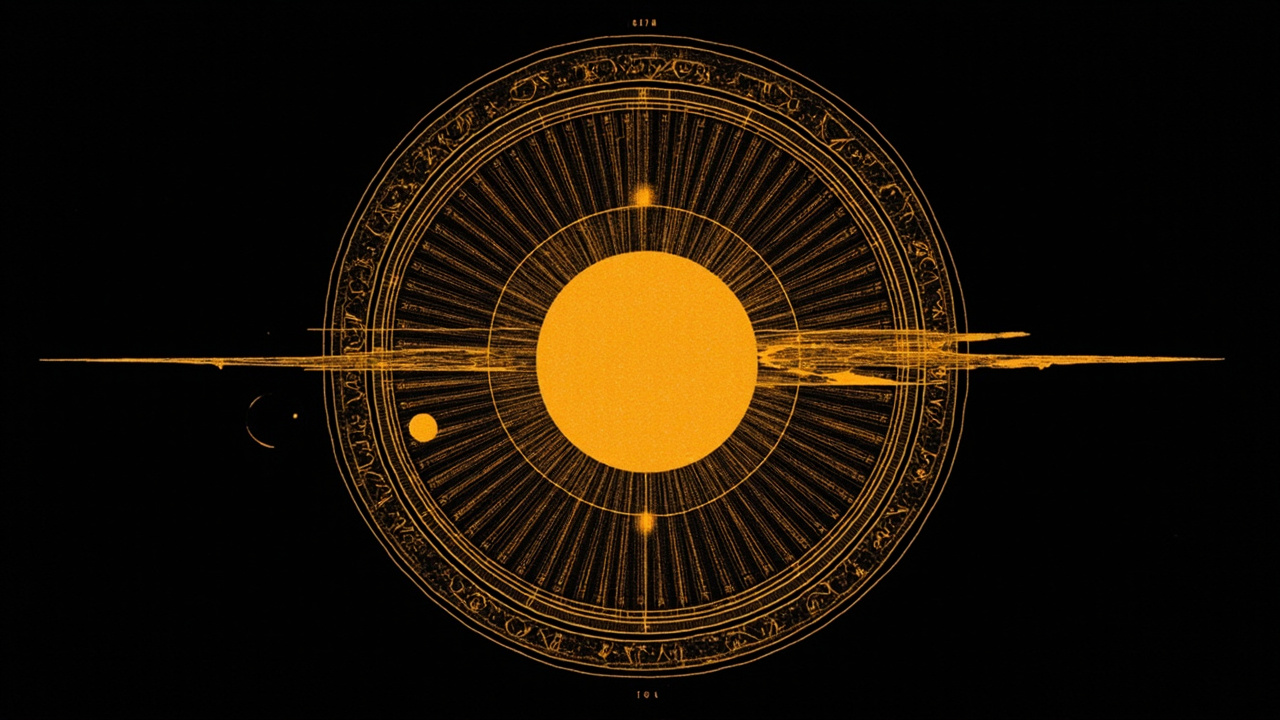
Juxtaposition Cross of Cross of Stillness: theme "Stillness". One of 192 incarnation crosses in Human Design.
Juxtaposition Cross of the Stillness — Human Design
The Architecture of Inner Quietude
The Juxtaposition Cross of the Stillness is one of the more contemplative entries in the Human Design mandala, carrying a life theme that often feels like a quiet contradiction: how to remain still within constant motion, and how to move gracefully through a world that resists peace. People born under this cross are not here to be loud revolutionaries or charismatic leaders. They are here to demonstrate that stillness is not passivity — it is a profound, active force. The cross speaks to those whose presence alone introduces a different rhythm into the rooms they enter.
The Four Gates Shaping the Theme
The Cross of Stillness is built from four gates that, together, form a circuit of mental processing, communication, and the search for meaning. These include Gate 62 (Prettifying — the Gate of Limitations), Gate 23 (Assimilation — the Gate of Abstract Thinking), Gate 56 (Stimulation — the Gate of the Wanderer), and Gate 35 (Change — the Gate of Transitoriness). All four sit on the Ajna and Throat centers, meaning the cross operates almost entirely through the mind and the voice.
Gate 62 brings an awareness of limitation and the hidden grace within constraints. Gate 23 offers the ability to hold abstract, complex thought and translate it into language. Gate 56 supplies the restless, curious energy of a storyteller and seeker, while Gate 35 provides an unblinking recognition that everything — including experience itself — is temporary. Together, these gates weave a pattern: a mind that wanders far, a voice that wishes to speak, and an inner knowing that peace is found not in accumulating experience but in stepping back from it.
What "Juxtaposition" Means Here
In Human Design, the Juxtaposition Crosses are characterized by the experience of moving between extremes. Unlike Right Angle Crosses, which have a defined direction and audience, Juxtaposition Crosses place a person in a kind of perpetual polarity — they are both the most still and the most restless person in the room, often in the same breath. The world does not read them as one cohesive message. Instead, it experiences them as a series of contrasts: profound one moment, scattered the next; deeply quiet one day, then suddenly full of stories the next.
For those with this cross, the lesson is not to resolve this tension but to embody it. The juxtaposition is the teaching. The mind that endlessly seeks stimulation is the same mind that knows how to rest in the gap between thoughts.
The Gift: Grace Through Restraint
The gift of this cross is the capacity to find stillness without withdrawing from life. Where others flee into distraction, noise, or busyness, the Cross of Stillness person demonstrates that it is possible to engage fully while remaining inwardly unmoved. They often become the steady presence others rely on — not because they have answers, but because they hold space without adding turbulence.
This is the prettifying of Gate 62 in action: finding beauty and elegance within the limits of a given moment. The restless stimulation of Gate 56 is not suppressed but given a higher expression. The mind continues to wander, but the wanderer returns home — to the body, the breath, the present.
The Shadow: Rigidity or Endless Drift
Like every cross, this one has its shadows. Without awareness, the stillness can calcify into rigidity, a kind of spiritual pride that mistakes numbness for peace. Or, in the opposite direction, the restlessness of Gate 56 and the transitoriness of Gate 35 can pull a person into perpetual seeking — chasing the next idea, the next experience, the next person, never landing long enough to taste the stillness they came here to embody.
The shadow is rarely dramatic. It tends to look like a quiet dissatisfaction, a sense that something is always missing, or a tendency to over-control environments in the name of peace. Recognizing this is half the work.
Living the Cross in Practice
Practical guidance for those with this cross is refreshingly simple. First: trust the quiet. The stillness is not a problem to solve — it is the medicine you carry. Second: do not mistake stillness for inaction. There is a right time to speak, and Gate 23 will let you know when abstract insight is ready to be shared. Third: let Gate 35 do its work. Things will end. People will leave. Ideas will dissolve. This is not failure; it is the natural shape of change, and the cross teaches you to move with it rather than against it.
Finally, stop trying to be one consistent thing. The juxtaposition is your design. Some days you will be the hermit. Some days the storyteller. Both are you.